
Introduction
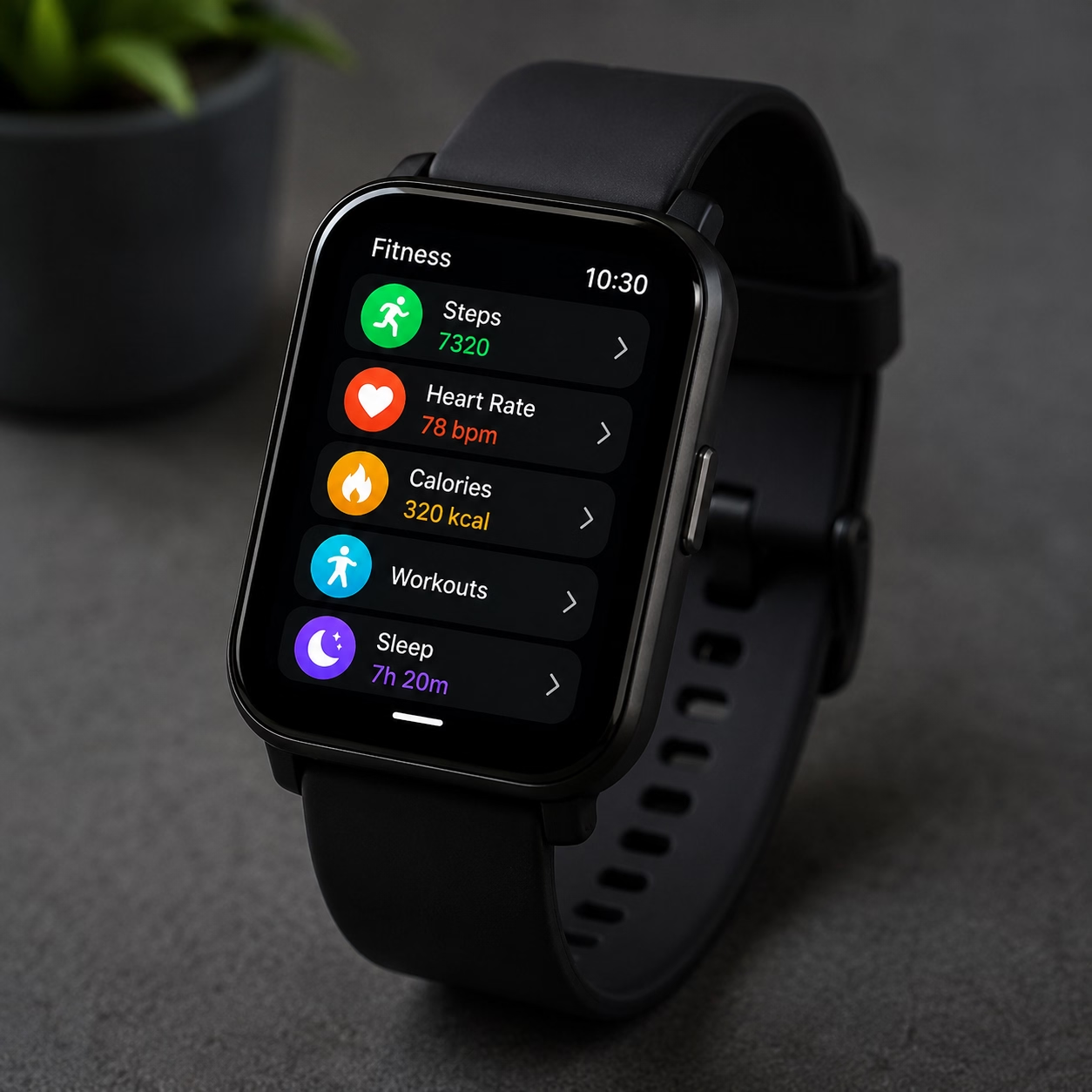
In recent years, smartwatches have stopped being luxury gadgets exclusive to brands like Apple, Samsung, or Garmin. Today, you can easily find “smartwatches” for less than $20 on online marketplaces, discount stores, and even supermarkets. The obvious question is: Do they actually work, or are they just cheap tech toys with touchscreens?
The short answer is: yes, they work… but with many limitations. Understanding those limitations is the key to avoiding disappointment.
What Do Cheap Smartwatches Usually Offer?
Most low-cost smartwatches include features such as:
-
Heart rate monitoring
-
Step counting
-
Calorie estimation
-
Sleep tracking
-
Phone notifications
-
Music controls
-
Call and message alerts
-
Alarms and stopwatch
-
Basic customizable watch faces
On paper, they look surprisingly similar to far more expensive models. The real difference lies in accuracy, software quality, and durability.
Heart Rate Monitoring: Yes, It Measures… But Don’t Expect Medical Accuracy
Most smartwatches under $20 use very basic optical sensors. They work by shining green LEDs onto the skin and estimating blood flow changes.
Do They Work?
Yes.
They can provide a rough estimate of your heart rate:
-
At rest
-
While walking
-
During light exercise
However, they often struggle when:
-
you exercise intensely,
-
sweat heavily,
-
move your wrist too much,
-
or wear the watch loosely.
A cheap smartwatch may display:
-
72 BPM when your actual rate is 80,
-
or even detect fake heartbeats when placed on a dark surface.
Yes, that actually happens.
So, Is It Useful?
For casual use, yes.
For medical purposes or serious athletic training, not
really.
If you need reliable accuracy for fitness or health monitoring, devices from brands like Garmin, Polar, or Fitbit are still far superior.
Step Counting: Probably the Most Useful Feature
This is where cheap smartwatches usually perform the best.
Step counting mainly relies on accelerometers, and that technology has become relatively inexpensive and mature.
Are They Accurate?
More or less.
Common issues include:
-
counting hand movements as steps,
-
missing slow walks,
-
or adding steps while driving.
Still, for someone who simply wants a general idea of daily activity, they work reasonably well.
The Important Part
You don’t need perfect accuracy to improve your habits.
If the watch motivates you to:
-
walk more,
-
get up from your desk,
-
or stay active daily,
then it’s already serving a useful purpose.
Calories Burned: The Least Reliable Metric
This is where many ultra-cheap smartwatches tend to oversell their capabilities.
“Calories burned” is usually estimated using:
-
steps,
-
heart rate,
-
age,
-
weight,
-
and generic formulas.
The problem is that inexpensive devices lack the advanced sensors and algorithms needed for accurate calculations.
The Result
The numbers are often rough estimates—or simply wrong.
Differences compared to premium devices can be significant.
Is It Useful Then?
Only as a general reference.
You shouldn’t rely on those numbers for:
-
strict dieting,
-
precise calorie tracking,
-
or professional fitness plans.
Sleep Tracking: Surprisingly Decent
Interestingly, many budget smartwatches do a fairly acceptable job tracking basic sleep patterns.
What Do They Detect?
Usually:
-
approximate sleep time,
-
wake-ups,
-
total sleep duration,
-
estimated light/deep sleep phases.
How Accurate Is It?
It’s nowhere near clinical sleep studies or premium wearables, but it can still help identify patterns such as:
-
insufficient sleep,
-
frequent interruptions,
-
irregular sleep schedules,
-
poor sleep quality.
The Important Detail
Most cheap watches do NOT truly measure sleep stages through brain
activity.
They
mainly estimate them based on movement and heart rate.
Still, for casual users, that may be good enough.
Phone Interaction: Useful, But Limited
This heavily depends on the model and the companion app it uses.
What They Usually Do Well
-
Show notifications
-
Display caller ID
-
Read short messages
-
Control music playback
-
Trigger the phone camera remotely
-
Help locate your phone
What They Usually Don’t Do Well
-
Comfortable message replies
-
Advanced voice assistant integration
-
Stable Bluetooth connectivity
-
Fast synchronization
-
Advanced app ecosystems
Many cheap smartwatches rely on generic apps with awkward translations and questionable software quality.
It’s also common to experience:
-
frequent disconnections,
-
delayed notifications,
-
poor privacy practices,
-
or firmware with little to no support.
Battery Life: One of Their Biggest Strengths
Ironically, many cheap smartwatches actually outlast premium models in battery life.
Why?
Because they feature:
-
less demanding displays,
-
simpler operating systems,
-
fewer advanced functions,
-
and basic processors.
It’s common to see inexpensive models lasting:
-
5 to 10 days,
-
or even longer.
Meanwhile, some advanced smartwatches barely survive 1 or 2 days on a charge.
What Nobody Talks About: Build Quality
This is usually where the biggest compromises appear.
Cheap smartwatches often come with:
-
low-quality displays,
-
imprecise touch controls,
-
inconsistent sensors,
-
questionable water resistance,
-
fragile straps,
-
and unreliable magnetic chargers.
Many work fine for a few months… until problems start appearing:
-
battery failures,
-
screen glitches,
-
or syncing issues.
So… Are They Worth It?
Yes, If:
-
you want to try a smartwatch without spending much,
-
you only need basic notifications,
-
you want simple step tracking,
-
you’re curious about basic monitoring,
-
or you just want an inexpensive gadget.
No, If:
-
you expect sports-grade accuracy,
-
you need medical-level measurements,
-
you want long-term durability,
-
you expect advanced integration,
-
or you want a truly smooth smartwatch experience.
The Most Honest Conclusion
Smartwatches under $20 are not completely useless.
But they are also not
cheap
replacements for an Apple Watch or a Samsung Galaxy Watch.
They work best as:
-
basic tech accessories,
-
activity motivators,
-
and simple phone companions.
Conclusion
The real problem begins when marketing promises “professional” features that simply cannot be delivered at that price point.
If you understand their limitations, they can be fun and surprisingly useful
gadgets.
If you expect premium accuracy for $20, you’ll probably end up disappointed.