
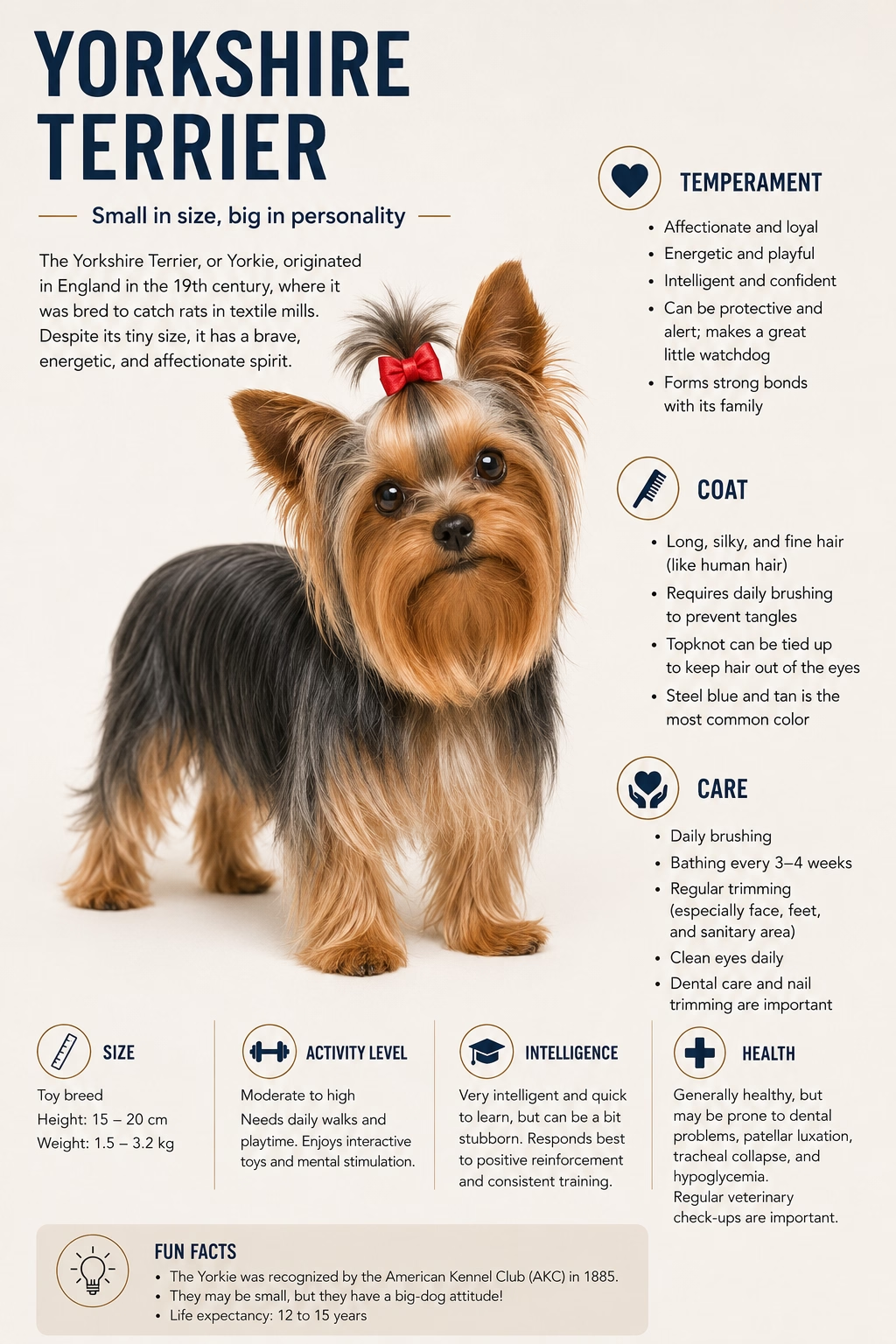
Introduction: Origin and History of the Yorkshire Terrier
The Yorkshire Terrier, affectionately known as the "Yorkie," is an iconic breed originating from the United Kingdom. Although today it is widely associated with luxury and elegance, its origins are remarkably humble. The Yorkie was originally bred as a robust working dog tasked with pest control in textile mills and coal mines.
Over time, their innate elegance and compact dimensions facilitated a smooth transition into the parlors of high society, consolidating their status as a highly distinguished companion dog.
It is fundamental for owners to understand that behind the Yorkie's sophisticated appearance and silky coat lies the tenacity, courage, and structural resilience of a true working terrier.
Temperament, Education, and Socialization
The Yorkshire Terrier packs a "big personality into a small body." They are brave, intelligent, strong-willed, and deeply affectionate companions. Their heritage as burrow hunters endows them with an alert nature and a high energy level that must be properly channeled.
To ensure a balanced and well-behaved dog, training should focus on three technical pillars:
- Early Socialization: Exposing the puppy to diverse stimuli, sounds, environments, and people is vital to mitigate their natural tendency toward distrust and prevent the development of compulsive barking.
- Positive Reinforcement: Due to their stubborn nature, motivation- and reward-based education is the only effective approach. Coercive methods must be avoided entirely, as they damage the bond of trust.
- Mental and Olfactory Stimulation: Being a highly intelligent breed, Yorkies require daily scent work and cognitive challenges to prevent boredom-induced stress and anxiety.
Morphology: Standard vs. Mini/Teacup Varieties
From a cynological perspective, it is crucial to distinguish between the existing varieties and understand their direct impact on canine health:
- Standard: This is the ideal weight range for optimal longevity and physical structural resistance, oscillating between 2 and 3.5 kg (approx. 4.4 to 7.7 lbs).
- Mini, Toy, or "Teacup": These terms describe individuals weighing less than 2 kg (4.4 lbs). These dogs exhibit extreme fragility and are highly prone to bone fractures, acute hypoglycemic episodes, and systemic health complications.
- Biewer Yorkshire: A distinct tricolor genetic variation featuring a specific color pattern of white, black, and tan.
The Color Coat Transition
A critical morphological trait of the breed is its dramatic pigmentation shift. Puppies are born black and tan. However, as they reach maturity (between 12 and 18 months), the coat must evolve into a dark steel blue and rich golden tan. This process is a key evaluation metric in professional show grooming.
Breed Health and Genetic Predispositions
Preventive medicine is the cornerstone to securing a long, healthy lifespan for this breed, which typically ranges from 12 to 16 years. Close monitoring is required for the following breed-specific predispositions:
1. Dental Issues
Yorkies have an exceptionally high predisposition to periodontal disease, affecting over 90% of the adult population. Their mild brachycephalic jaw anatomy and tiny mouths lead to dental crowding. This facilitates rapid tartar and plaque buildup, resulting in severe infections and premature tooth loss.
2. Respiratory Pathologies
Tracheal Collapse is the quintessential respiratory disease in Yorkies. It is clinically characterized by a dry, honking "goose-like" cough. It is particularly prevalent in smaller or "teacup" specimens and requires the strict use of a chest harness instead of a traditional neck collar.
3. Genetic and Orthopedic Conditions
- Patellar Luxation: A misalignment or slipping of the kneecap that causes intermittent limping and secondary osteoarthritis.
- Legg-Calvé-Perthes Disease: Aseptic necrosis of the femoral head, commonly diagnosed in young growing dogs.
- Ocular Health: High predisposition to retinal dysplasia, entropion, as well as conditions like Keratitis (corneal inflammation) and Epiphora (excessive tearing that stains the facial fur).
- Portosystemic Shunt: A congenital circulatory defect in the liver that prevents proper blood filtration, leading to systemic blood toxicity.
Specialized Nutrition and Metabolism
The Yorkie possesses an accelerated metabolic rate, meaning they burn energy rapidly and have an increased risk of dehydration if dietary needs aren't met. Their diet should be professionally formulated, prioritizing high palatability and a kibble/food texture tailored specifically to their small jaws.
We highly recommend premium balanced commercial feed or specialized natural diets (cooked or properly supervised BARF). Natural diets offer direct benefits for digestibility and provide bioavailable nutrients that maximize coat shine. Because Yorkies are notorious finicky eaters, superior ingredient quality is non-negotiable for their long-term dermatological and systemic health.
Hygiene and Aesthetics (Professional Grooming)
Maintaining a Yorkshire Terrier's coat is a technical, daily commitment.
Coat Maintenance and Essential Tools
The Yorkie's hair grows continuously and lacks an undercoat, making them functionally hypoallergenic as they do not shed in the traditional sense. To prevent severe matting and skin tangles, professional tools are imperative: a high-quality pin brush (butter brush) for the body, a dual-sided metal comb for sensitive areas, and a leave-in conditioning spray to protect the hair fibers from breaking during brushing.
Popular Grooming Styles
- Puppy Cut: Highly practical for companion dogs, maintaining the coat length between 2 to 4 cm for a plush, low-maintenance look.
- Westy Cut: A short body trim with a rounded face style, emulating the look of a Scottish Terrier.
- Teddy Bear Cut: Focuses on creating a perfectly circular, sweet, and youthful facial expression.
- Show Style: The traditional exhibition standard, featuring a floor-length flowing coat with a perfectly straight dorsal part line.
Sensitive Zone Hygiene
It is vital to tie and maintain the "Top Knot" to keep the visual field clear and prevent direct ocular irritation. Daily eye cleaning is mandatory to manage epiphora staining. Additionally, implement weekly ear checks (plucking excess hair from the canal) and routine hygienic trims around the perianal and genital zones to prevent local infections.
Preventive Health: Vaccination and Deworming
An unwavering immunological protocol is necessary to protect their sensitive immune systems:
- Vaccination Schedule: Strict administration of core vaccines (such as Vanguard Plus 5/CV-L or Vanguard Plus 5L4), Rabies, and respiratory protection against Canine Infectious Tracheobronchitis (Kennel Cough) via Vanguard B Oral.
- Deworming protocol: Monthly administration of broad-spectrum antiparasitics targeting both internal and external parasites using premium veterinary products like Revolution or Simparica.
To guarantee complete seroconversion and robust immunity, the final dose of the initial puppy vaccination protocol must be administered precisely at 16 weeks of age.
Senior Dog Care (Ages 8+ Years)
Upon entering the senior stage, Yorkshire Terriers require biannual veterinary wellness exams for the early detection of chronic degenerative conditions. Owners must be highly vigilant regarding the following clinical warning signs:
- Polyuria and Polidipsia: A sudden increase in water consumption and urination frequency is a primary cardinal sign of renal failure, diabetes, or endocrine disorders like Cushing's Syndrome.
- Nocturnal Coughing: Frequently associated with advancing congestive heart failure or severe, late-stage tracheal collapse.
- Cognitive Dysfunction: Disorientation, pacing, or noticeable disruptions in their normal sleep-wake cycles.
Environmental Adaptation: Because senior Yorkies have a compromised thermoregulatory capacity, keeping them warm with sweaters is crucial. Furthermore, the home environment should be physically adapted (using ramps and steps) to preserve mobility and ease discomfort from potential osteoarthritis.