
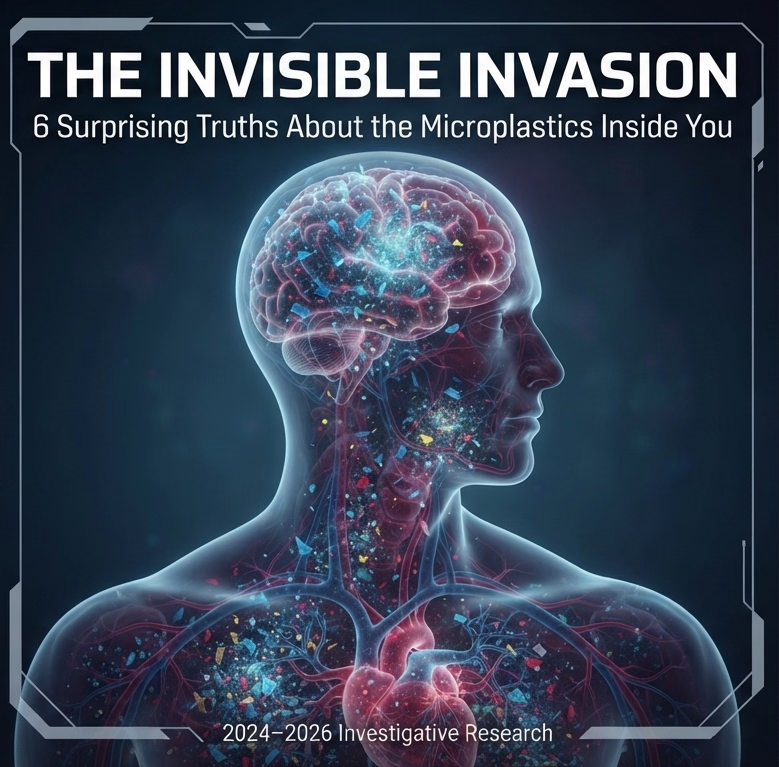
Introduction: The Plastic Experiment We Never Signed Up For
From sun-scorched agricultural hubs to the pulsating hearts of global urban centers, plastic has become the defining geological marker of our age. It is durable, versatile, and, as we are now discovering, nearly impossible to keep on the outside. We have reached a critical juncture where we are no longer just living with plastic; we are becoming part plastic.
Recent investigative research spanning 2024 into the projected clinical findings of 2026 has pulled back the curtain on this "invisible invasion." To grasp the scale, we must define the parameters of this contaminant:
- Microplastics (MP): Synthetic particles ranging from 0.1 μm to 5 mm.
- Nanoplastics (NP): Even more elusive particles, measuring less than 1 μm.
These are not merely "trash" but the results of a relentless process of fragmentation—the breakdown of larger items through mechanical and chemical disintegration.
As a health journalist tracking these developments, I have synthesized the most impactful takeaways from the 2024–2026 research cycle. The data suggests that our daily habits are unknowingly fueling a massive, uncontrolled biological experiment. Here are the six truths you need to know about the polymers currently residing in your tissues.
1. The Bottled Water Paradox: Why the "Pure" Choice is the Most Contaminated
Many consumers pay a premium for bottled water under the assumption that it is a "pure" alternative to tap water. However, recent studies reveal a startling paradox: the packaging itself is the primary source of contamination.
The numbers are staggering. An individual meeting their daily hydration needs solely through bottled sources may ingest up to 90,000 plastic particles annually. In comparison, those who stick to tap water ingest approximately 4,000. Investigations into multiple global brands found that 93% contained microplastic contamination, with an average of 325 particles per liter.
We pay for the bottle, but we eat the bottle.
"The smaller particles—below 10 microns—can pass into tissues and organs. We are seeing only the tip of the iceberg regarding the potential impact of the smallest particles."
2. The Microwave Menace: A "Plastic Bomb" in Three Minutes
Convenience often hides a high biological cost. Research published as recently as 2025 has identified the microwave as a primary driver of plastic ingestion. When we heat food in plastic containers, we trigger a process of thermal disintegration accelerated by hydrolysis and photolysis.
In controlled tests, just three minutes of microwaving released up to 4.22 million microplastics and 2.11 billion nanoplastics per square centimeter of the container's surface. This effectively turns a simple meal into a "plastic bomb." This habit represents one of the most significant ingestion pathways in modern life. The shift to glass or stainless steel is not just a lifestyle choice; it is a high-impact clinical intervention for your internal environment.
3. The "Trojan Horse" Effect: Plastics as Carriers for Viruses and Superbugs
As researchers have detailed, microplastics are not just inert physical irritants; they are sophisticated "vectors." Due to their lipophilic (fat-attracting) nature, these particles adsorb toxins, heavy metals, and even pathogens.
- Biological Transport: Microplastics have been found to stabilize and transport viruses.
- The Superbug Crisis: In wastewater and marine environments, plastics facilitate the "horizontal transfer" of antibiotic-resistance genes. Bacteria use plastic surfaces as platforms to exchange genetic material, fueling the rise of multiresistant superbugs.
This creates a public health "double whammy." The plastic particle acts as a Trojan Horse, crossing biological barriers while carrying a payload of chemical and biological threats that the body's immune system may not be prepared to handle.
4. The Brain’s Plastic Burden: Beyond the Blood-Brain Barrier
The most unsettling discovery of the 2024–2025 period involves the human brain. Microplastics are not merely circulating in our blood—they are accumulating in neural tissues.
The study found that some brain samples contained the equivalent of a "tablespoon" of plastic. Crucially, the concentration of plastics in the brain was found to be 30 times higher than in the liver or kidneys. This is likely due to the brain's high fat content; because plastics are lipophilic, they are effectively "shuttled" across the blood-brain barrier by the very fats the brain requires to function.
Most alarming is the correlation with neurodegenerative disease: plastic levels were 3 to 5 times higher in the brains of individuals diagnosed with dementia. This invasion begins even before we take our first breath; microplastics are now consistently found in the human placenta, meaning the "plastic experiment" is a lifelong burden.
5. The Heart of the Matter: A 4.5x Increase in Cardiovascular Risk
In March 2024, a landmark study shifted microplastics from an "environmental nuisance" to a "direct medical emergency."
The study analyzed the arterial plaques of patients with atherosclerosis and found microplastics in nearly 60% of them. The clinical outcome was definitive: patients with these plastic deposits had a 4.5 times higher risk of suffering a major cardiovascular event—such as a heart attack or stroke—compared to those whose plaques were plastic-free. This suggests that microplastics are a primary, previously overlooked driver of vascular inflammation and life-threatening blood clots.
6. The Gut Disruption: When Microplastics Meet Your Microbiome
The human gut is the primary gateway for plastic, and our internal ecosystem—the microbiota—is the first line of defense. Research suggests a bidirectional, disruptive relationship. Ingestion leads to "dysbiosis," specifically affecting taxonomic levels (Phylum) and activating the Aryl Hydrocarbon Receptor (AhR), which is involved in the body’s response to toxins.
While the microbiota attempts to fight back by altering the surface of the plastic particles, the long-term consequences remain a scientific gray area:
"There are few studies on the effects of microplastics on the human gut microbiota, but the results show that they can cause changes in it, which could affect human health."